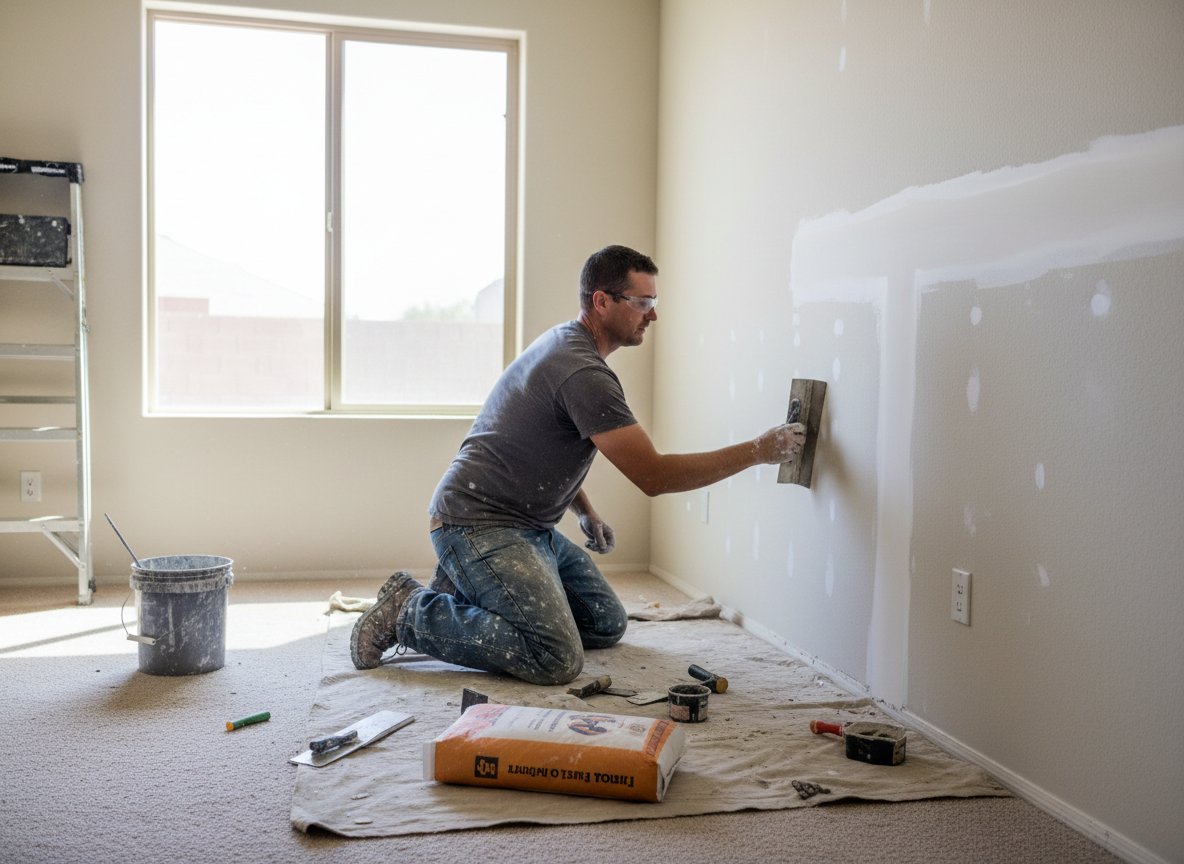
Gilbert sits in Maricopa County with a hot desert climate where summer highs regularly exceed 110 degrees. This causes framing lumber and drywall to expand and contract, opening seams and nail pops in homes built during the 1990s and early 2000s in neighborhoods such as San Tan Ranch and Layne Heights. Older stock near Heritage Court and Downtown Gilbert often has 1/2-inch drywall on 24-inch centers that cracks at corners when soil shifts after rare heavy rains.
Newer subdivisions in Agritopia and Power Ranch use 5/8-inch Type X in many interiors. Repair work here requires matching both thickness and texture, especially orange-peel and knockdown finishes common on ceilings. Water intrusion from monsoon leaks around windows or roof valleys can travel behind the paper face, so we cut back to sound material rather than skim coating over damp paper. Chandler and Mesa crews see the same pattern when they cross into Gilbert jobs.
Riparian Preserve humidity pockets near some Power Ranch homes slow joint compound set times even in dry months. We use fast-set hot mud on those patches and run fans to avoid telegraphing. Maricopa County residential codes require fire-rated assemblies in certain garage-to-house walls; any repair crossing those planes must restore the rating with the correct compound and tape.
Baseline Road traffic and construction vibration from ongoing growth around 1911 E Baseline Rd can reopen fresh repairs in lighter-framed homes. We always check for movement with a straightedge before final texture and recommend waiting a full seasonal cycle on larger patches.
Technician insight
In Gilbert the thing that catches most people out with Drywall Repair Contractor is how fast joint compound skins over in 110-degree afternoons around the Riparian Preserve and Agritopia, then cracks weeks later when monsoon moisture finally reaches the wall. Homeowners try to patch during the hottest part of the day and wonder why the seam reopens.
Ceiling Repair After Leak in Power Ranch
A homeowner noticed a softball-sized bulge on a living-room ceiling after monsoon rain. We cut out the wet section, found the leak had traveled along a truss, replaced the drywall, and retaped using fast-set compound to beat the afternoon heat. The texture matched the existing knockdown and the ceiling held through the next temperature swing.
How it works
- 1
On-Site Assessment
We measure damage extent, note texture type, and check for hidden moisture or structural movement in the specific Gilbert neighborhood.
- 2
Material Matching
Select drywall thickness, tape, and compound to match existing construction while accounting for local heat and low humidity effects on drying.
- 3
Precision Repair
Cut out damaged sections, install new pieces with proper fastening, tape seams, and apply coats while managing set times in desert conditions.
- 4
Finish And Texture
Blend texture to surrounding surfaces, prime, and leave the area ready for paint with minimal dust in occupied homes.
Pricing
Upfront quotes given after inspection; final price depends on patch size, texture complexity, and access in older Gilbert homes.