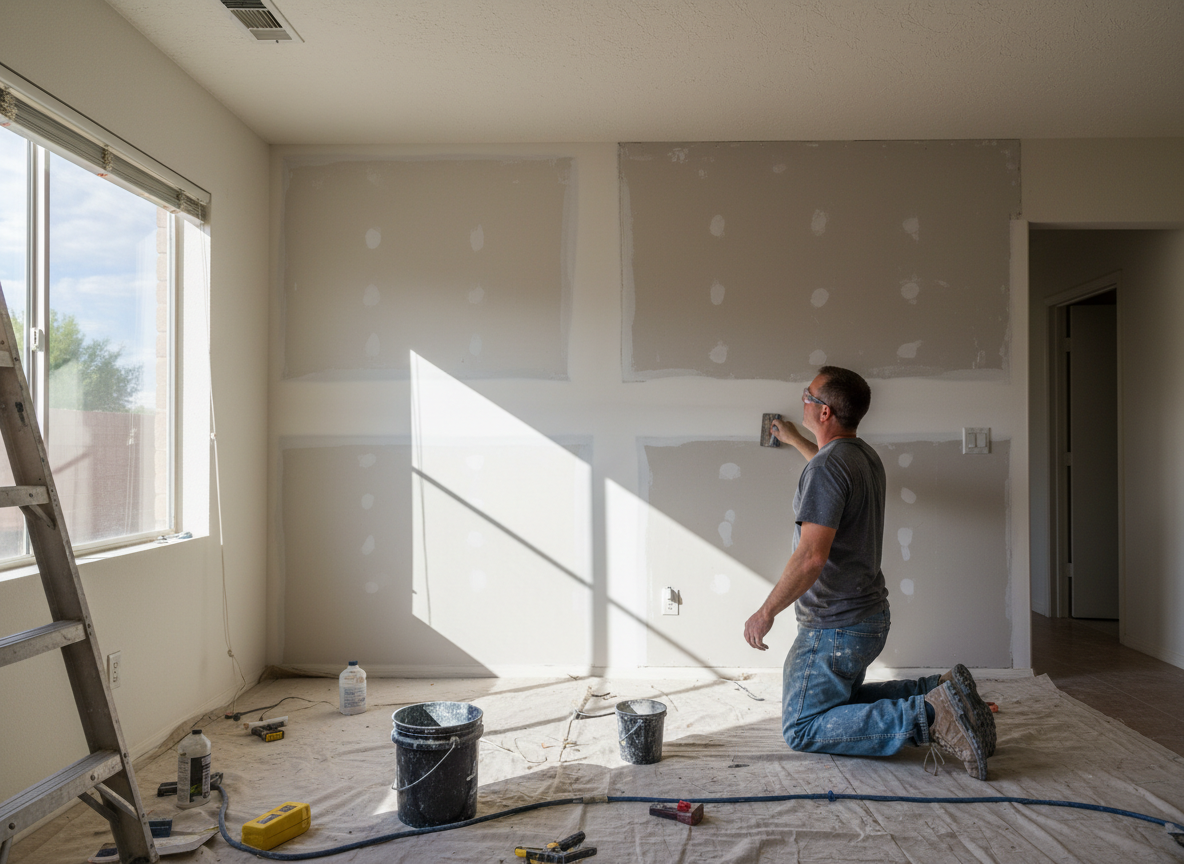
Gilbert’s hot desert climate drives daily temperature swings that make drywall joints open and close, especially in homes built before 2005 in Downtown Gilbert and Layne Heights. Sheetrock repair here starts with checking for movement at seams and corners before any patching begins, because skipping that step means the same crack returns after the first monsoon season. Crews also watch for dust infiltration from nearby agricultural fields in San Tan Ranch that can contaminate joint compound if the room is not properly sealed.
Maricopa County permitting rules apply when repair touches more than one full sheet or affects fire-rated walls common in Power Ranch townhomes. Technicians carry the correct type-X material and maintain the required 5/8-inch thickness so inspections pass without callbacks. In Agritopia’s older farm-style houses, plaster-and-lath transitions often meet modern sheetrock; matching the two surfaces without telegraphing requires a wider feathering technique than standard patches.
Queen Creek and Mesa homes near the Riparian Preserve face occasional irrigation overspray that wicks into exterior walls. Repair includes cutting back to dry framing, treating for residual moisture, and using mold-resistant board where humidity lingers. These steps add time but prevent the soft spots that appear after the next heavy rain.
Technician insight
In Gilbert, the thing that catches most people out with Sheetrock Repair Contractor is ignoring the daily expansion from 110-degree afternoons in summer. Homes in Agritopia and older sections of Downtown Gilbert move enough that a standard patch cracks again within months unless you float a wider joint and use flexible compound.
Water-Damaged Wall in Power Ranch
Homeowner noticed a soft spot near a window after monsoon rains. Inspection showed irrigation overspray had wicked into the sheetrock behind the baseboard. We cut out the wet area, dried the framing, installed moisture-resistant board, and blended texture to match the rest of the room so the wall stayed solid through the next summer.
How it works
- 1
Site Assessment
Measure damage, identify cause such as settling or moisture, and confirm wall type in Gilbert homes.
- 2
Prep and Containment
Protect floors and HVAC, cut out damaged sections, and ventilate to manage desert dust.
- 3
Install and Tape
Hang new sheetrock, tape seams with fiberglass or paper tape suited to the movement expected in Maricopa County heat.
- 4
Finish and Texture
Apply matching texture, prime, and leave ready for paint.
Pricing
Upfront quotes after on-site inspection; price varies by size, texture match, and whether moisture remediation is needed.