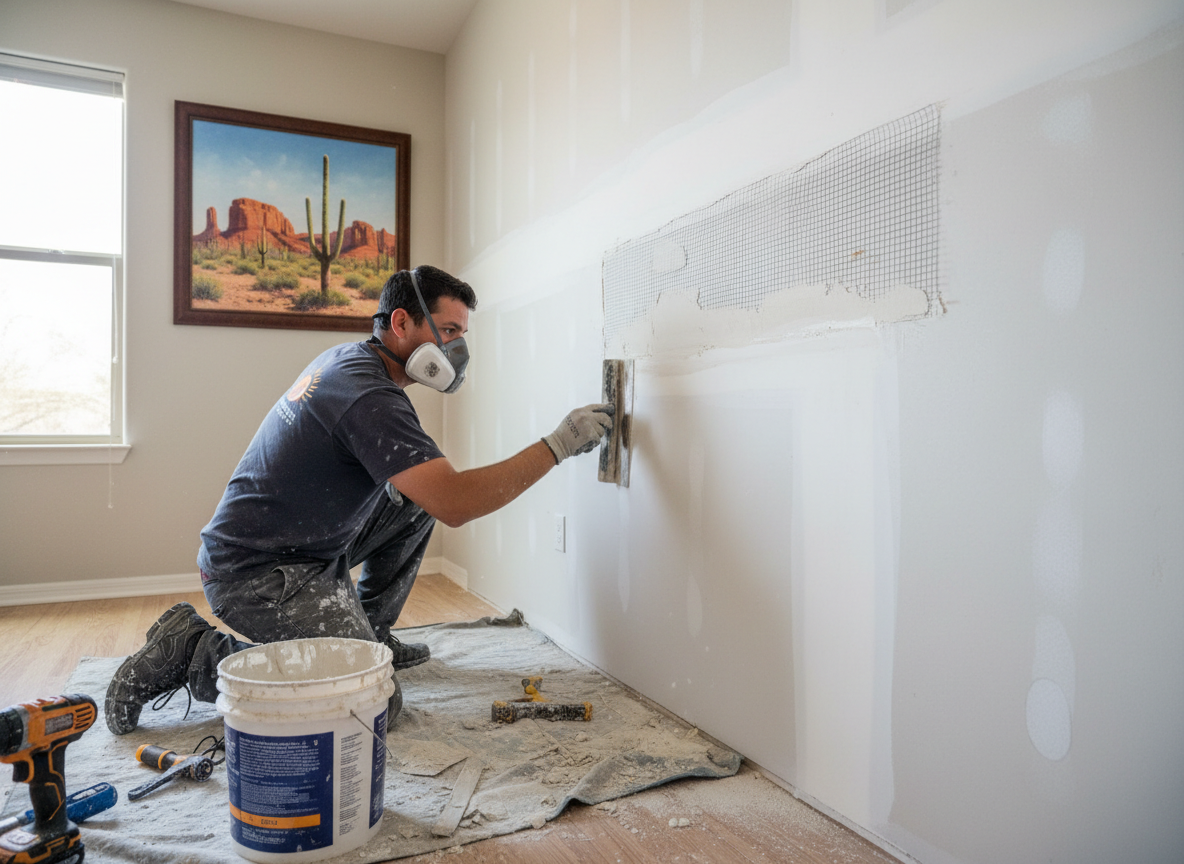
Gilbert homes built from the 1990s onward in neighborhoods like Power Ranch and San Tan Ranch often show nail pops and seam cracks once summer temperatures push past 110 degrees. The extreme daily expansion and contraction in Maricopa County pulls fasteners loose in standard 1/2-inch panels, especially where builders used lightweight mud compounds. We cut out the damaged section to the nearest studs, install new rock with the correct screw pattern, and feather three coats of setting-type compound to avoid telegraphing lines when the next heat wave hits.
Water intrusion from AC condensate lines or occasional monsoon leaks shows up first around ceiling fixtures in Agritopia and Layne Heights homes. Moisture softens the paper facing and grows mold behind the panel before owners notice. Our process includes removing the wet rock plus a 12-inch buffer, treating the cavity with an antimicrobial, then installing moisture-resistant board where the original was standard. This prevents the same spot from failing again during the next humidity spike.
Older stock near Heritage Court and Downtown Gilbert frequently has 3/8-inch rock on 24-inch centers. Matching texture on these ceilings requires hand-applied knockdown rather than machine spray to blend with the original pattern. We also check for outdated paper-faced tape that has pulled away, replacing it with fiberglass mesh embedded in setting compound so the repair holds when winter lows drop into the 30s and the house dries out rapidly.
Technician insight
In Gilbert the thing that catches most people out with Sheetrock Repair is assuming a small water spot from an AC drip is just cosmetic. By the time it shows on the ceiling in Power Ranch or Queen Creek homes the paper is already delaminated and mold has started on the back side, so you end up cutting twice as much rock as the homeowner expected.
Ceiling repair after condensate leak
A homeowner in Agritopia noticed a faint brown ring above the kitchen island. We found the AC line had been dripping for weeks and the 1/2-inch rock was saturated. After removing the wet section and treating the joists we installed new rock, feathered the compound, and matched the existing orange-peel texture so the ceiling looked untouched once painted.
How it works
- 1
Assessment
We inspect the affected area, check for hidden moisture, and note the original panel thickness and texture type common to that Gilbert neighborhood.
- 2
Prep and Containment
Furniture is covered and plastic sheeting isolates dust before cutting out damaged sections back to solid framing.
- 3
Installation
New sheetrock is screwed to code spacing, taped with fiberglass mesh, and coated with setting compound in multiple thin layers.
- 4
Finish and Texture
Final sanding and hand-applied texture match the surrounding surface so the repair disappears under flat or eggshell paint.
Pricing
Pricing depends on access, number of layers, and whether moisture remediation is required; we provide upfront quotes after on-site inspection.