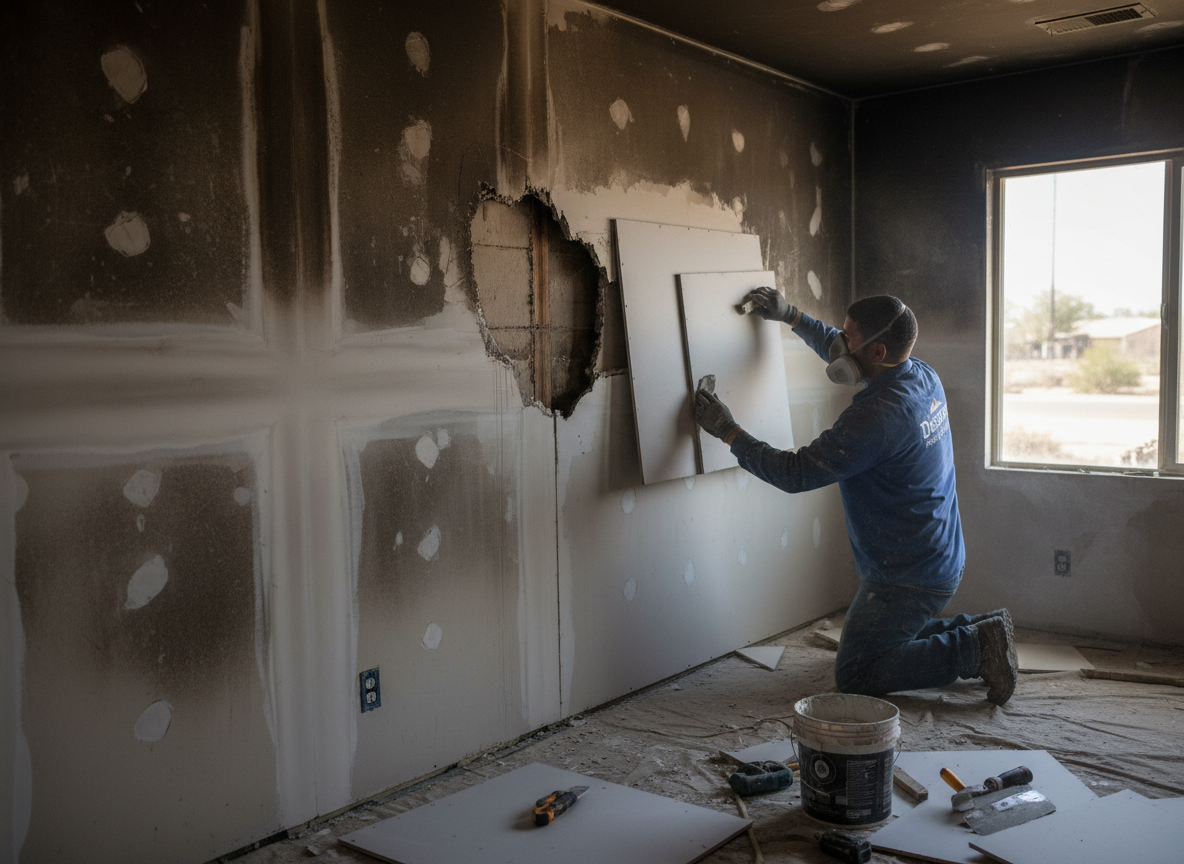
Gilbert homes in neighborhoods like Agritopia and San Tan Ranch often feature open floor plans with drywall that runs continuously into attics and HVAC chases. When fire occurs, smoke travels quickly through these paths and leaves acidic residue that continues to degrade paper facing long after the flames are out. In the hot desert climate, with summer temperatures routinely above 110 degrees, this residue bakes into the gypsum core, making simple cleaning insufficient and requiring full removal of affected sheets to prevent recurring odor and staining.
Maricopa County building codes require fire-rated Type X drywall in garages, utility rooms, and certain shared walls. Replacing damaged sections means matching both the rating and the existing texture, which in older Layne Heights homes is frequently a hand-troweled knockdown finish rather than the spray texture common in newer Power Ranch builds. We also address the common issue of compromised insulation behind the drywall; once removed, the cavity must be inspected for hidden ember pockets before new material is installed.
Working in Gilbert's mild winters allows year-round scheduling, yet the dry air and constant AC use mean dust from demolition spreads easily into living spaces. Containment with plastic sheeting and negative air machines is essential to protect furnishings and electronics that can be ruined by gypsum and soot particles. Homeowners in Queen Creek and Chandler who delay repairs often discover that residual smoke odor returns once the system cycles again, confirming the need for complete substrate replacement rather than surface treatment.
Technician insight
In Gilbert, the thing that catches most people out with Fire Damaged Drywall Repair is how smoke travels through the shared attic spaces common in Agritopia and Power Ranch tract homes, especially when the AC runs constantly in summer heat; skipping the extra sealing step on new drywall almost always brings the odor back within weeks.
Kitchen Fire Damage in Agritopia
A small kitchen fire in an Agritopia home sent smoke through the open ceiling into the family room. Inspection revealed hidden charring along the attic chase. Affected drywall was removed, cavities cleaned, new Type X sheets installed, and texture matched to the original knockdown finish.
How it works
- 1
Initial Assessment
Inspect all affected walls, ceilings, and cavities for hidden char and smoke migration, documenting extent for insurance.
- 2
Containment and Safety
Set up plastic barriers and negative air to isolate the work zone and protect remaining living areas from dust and odor.
- 3
Removal of Damaged Material
Cut out charred or smoke-saturated drywall, dispose of debris, and check cavities for ember pockets or insulation issues.
- 4
Installation and Finishing
Install matching fire-rated drywall, tape, texture to blend with surrounding surfaces, and apply primer sealer before paint.
Pricing
Pricing varies with extent of hidden damage and access; upfront written quotes provided after on-site inspection.