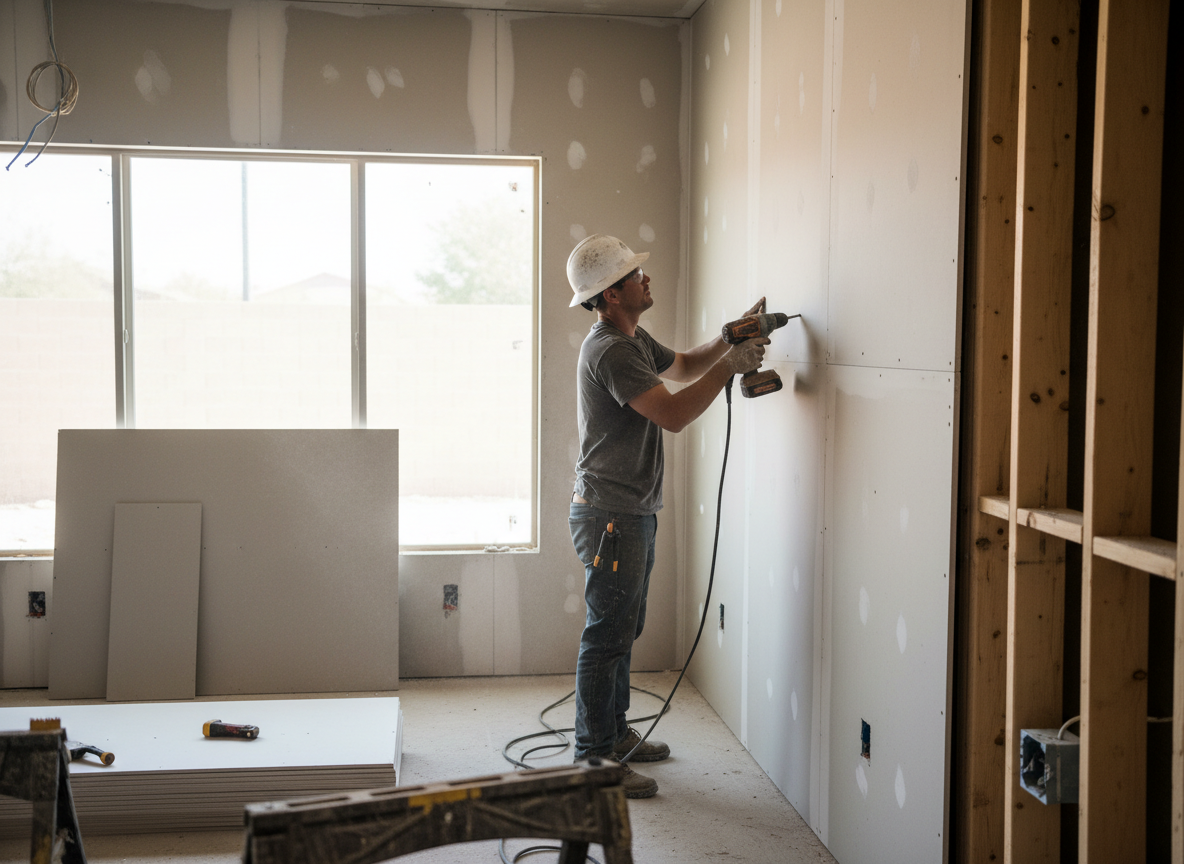
Gilbert's housing ranges from 1970s ranch homes in Layne Heights and Downtown Gilbert to newer builds in San Tan Ranch and Agritopia. Remodeling work must account for how the hot desert climate drives daily expansion and contraction cycles that crack seams and corners faster than in milder regions. We routinely sister new sheets to existing 1/2-inch and 5/8-inch drywall while matching the original texture and paint layers that have baked in the Arizona sun for decades.
Maricopa County code requires fire-rated assemblies in garages and certain multi-family walls; skipping the proper Type X or sound-rated products during a remodel triggers inspection failures. In neighborhoods near the Riparian Preserve or Gilbert Regional Park, irrigation runoff and monsoon humidity can create hidden moisture behind baseboards that only shows up once cabinets or vanities are removed. We always pull base plates and check for rot before hanging new board.
Nearby Chandler and Mesa crews sometimes use thinner corner bead that fails under Gilbert's temperature swings. We spec heavier metal or paper-faced bead and pre-fill with setting-type compound rated for 100-plus-degree days. This prevents callbacks when homeowners turn on evaporative coolers in shoulder seasons.
Seasonal Considerations
Drywall remodels scheduled between May and September require extra ventilation and dust containment because afternoon heat makes joint compound set too fast. We schedule finish coats for early morning or evening hours to maintain workable open time.
Technician insight
In Gilbert, the thing that catches most people out with Drywall Remodel Contractor is how quickly the desert heat dries joint compound and pulls seams apart in homes built before 1995 around Heritage Court and Layne Heights. Homeowners often skip pulling the base plates to check for past irrigation leaks from the canals that feed the Riparian Preserve, then wonder why new board fails within a year.
Power Ranch Master Bath Remodel
Homeowner removed a garden tub and found water-damaged drywall extending into the adjacent closet. We opened the wall, discovered rotted plates from long-term shower leakage, sistered new studs, installed moisture-resistant board, and retaped to match the existing orange-peel texture throughout the 1998 home.
How it works
- 1
Site Assessment
Measure all affected walls and ceilings, note existing texture, check for moisture near windows and plumbing, and confirm Maricopa County permit needs.
- 2
Protection and Demolition
Isolate work zones with plastic and negative air, remove old drywall or damaged sections, and dispose of debris while protecting floors and cabinets.
- 3
Framing and Utility Prep
Repair or add blocking, reroute any low-voltage or plumbing as needed, and install insulation or sound batts before new board.
- 4
Hang, Tape, and Finish
Hang new sheets with proper fasteners and spacing, tape and apply multiple coats of compound, then match original texture before priming.
- 5
Final Walk and Touch-Up
Inspect under natural and artificial light, address any missed spots, and coordinate final paint with the homeowner's chosen contractor.
Pricing
Upfront written quotes after on-site measurement; final price depends on access, texture complexity, and whether fire-rated or moisture-resistant board is needed.