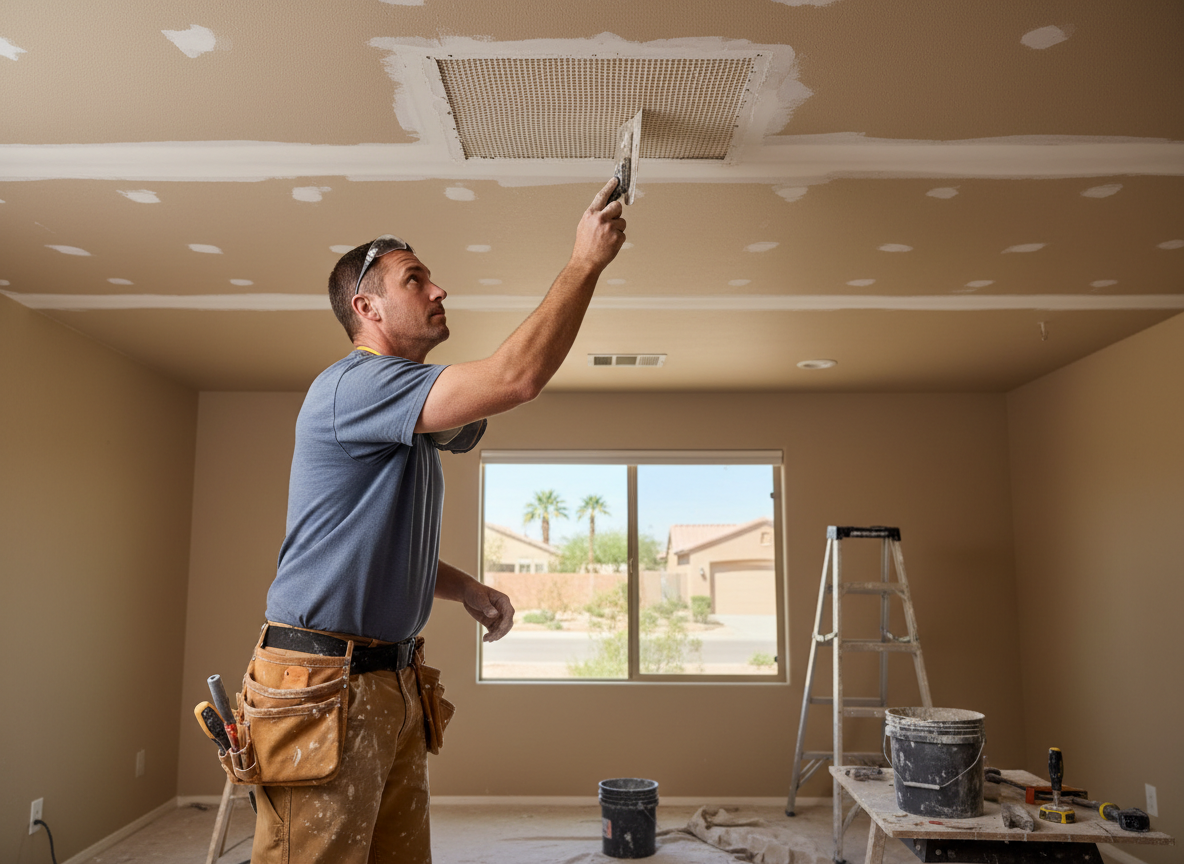
Gilbert homes in neighborhoods like Agritopia and San Tan Ranch often show seam cracks and nail pops after years of extreme summer heat followed by mild winters. The constant expansion and contraction in Maricopa County drywall moves differently than in cooler regions, so standard patches fail quickly if the underlying cause is not addressed. We cut back to solid backing, use fiberglass tape on high-movement joints, and apply multiple thin coats of setting-type compound to prevent telegraphing through the finish.
Power Ranch and Layne Heights properties frequently need patches around irrigation lines or near the Riparian Preserve where humidity spikes during monsoon season. Moisture can wick into paper-faced drywall even without visible leaks, leading to recurring bubbles. We always check for hidden water issues before patching and switch to moisture-resistant board in those zones. This approach keeps repairs from reopening when temperatures climb back above 110 degrees.
Downtown Gilbert and nearby Chandler or Mesa homes built in the 1990s and early 2000s have thicker plaster-over-drywall walls that require feathering out farther than modern 1/2-inch sheets. Matching the original texture takes extra passes and the right knockdown or orange-peel settings. We carry multiple hopper guns on every truck so the finished patch disappears under the same lighting conditions found in Heritage Court or Gilbert Regional Park homes.
Technician insight
In Gilbert, the thing that catches most people out with Drywall Patch Repair is assuming a small crack from summer heat is just cosmetic. Homes in Agritopia and near the Riparian Preserve often have irrigation or minor settling that keeps moving the wall, so a quick spackle job opens again within weeks. We always pull back farther than the visible damage and check the framing or backing.
Crack Repair Near Power Ranch
A homeowner noticed a recurring seam crack along a living-room wall after monsoon rains. We found the joint had been taped over a small gap in the backing with no expansion allowance. We removed the loose tape, added proper blocking, retaped with fiberglass, and applied three coats of setting compound. The patch held through the next 115-degree summer without reopening.
How it works
- 1
Site Assessment
We inspect the damaged area, check for moisture or movement, and note the wall texture and paint finish in Gilbert homes.
- 2
Preparation
Cut out loose material to solid backing, install new drywall or mesh where needed, and protect surrounding surfaces.
- 3
Taping and Coating
Apply fiberglass tape and multiple coats of setting compound, sanding between layers for a smooth transition.
- 4
Texture and Finish
Match the existing texture and prime the patch so paint blends with the rest of the wall.
Pricing
Pricing depends on patch size, wall access, and whether texture or paint matching is required; we provide upfront quotes after inspection.