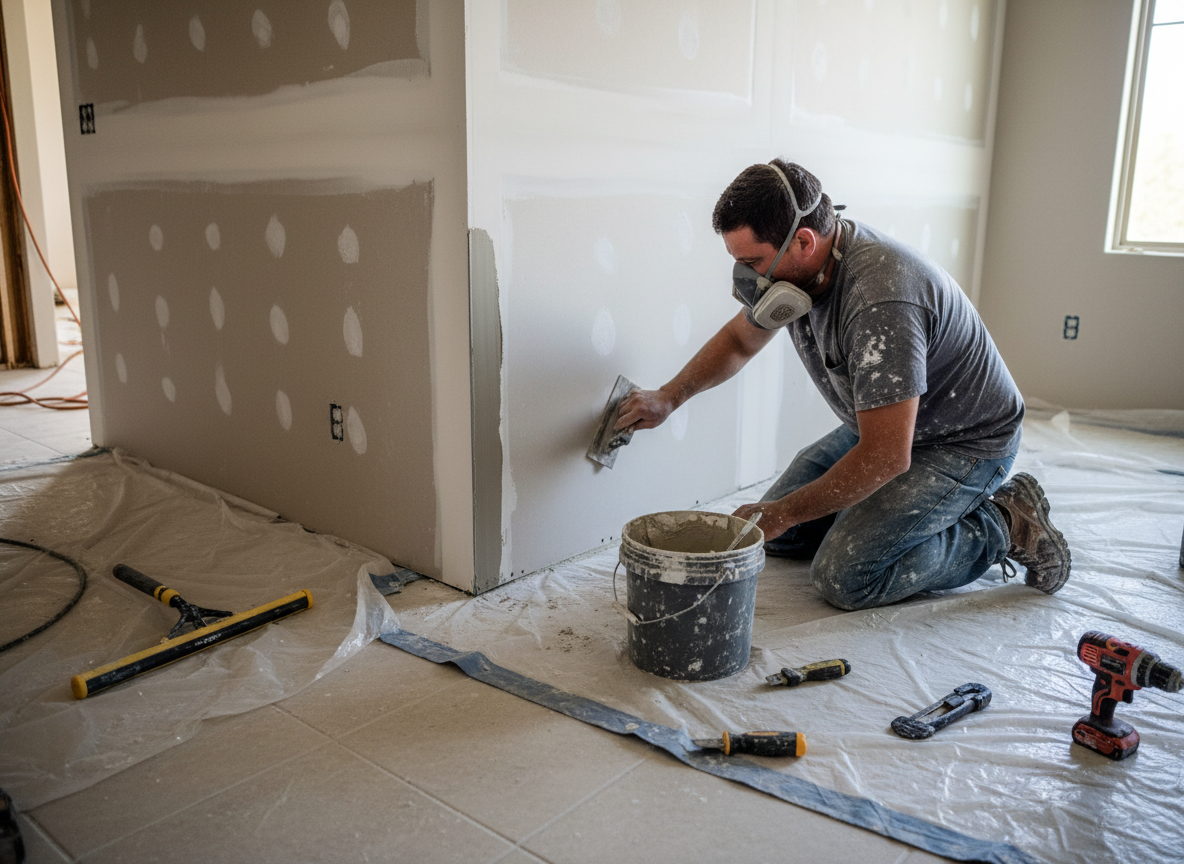
Gilbert’s hot desert climate drives repeated expansion and contraction in wall corners, especially in homes built before 2005 around Downtown Gilbert and Layne Heights. Metal corner bead often pops or cracks when temperatures swing from 110-plus summer days to mild winter nights, while vinyl bead holds better but still fails at seams where tape was applied too thin. We match the original bead type, use setting-type compound rated for high heat, and embed fiberglass tape on both sides of the corner to reduce recurrence. Jobs in Agritopia and San Tan Ranch frequently involve textured finishes that must be matched exactly or the repair stands out under afternoon light.
Maricopa County homes near the Riparian Preserve and Heritage Court sit on clay-heavy soil that shifts after monsoon rains, stressing interior corners on load-bearing walls. Corner repairs here require checking for movement before finishing; otherwise new cracks appear within one season. We remove loose material back to solid substrate, install new bead with corrosion-resistant fasteners, and apply multiple thin coats of compound rather than one heavy layer. This approach prevents telegraphing through paint when summer heat returns. Nearby Chandler and Mesa jobs show the same pattern, confirming the method works across the region’s similar stock.
Seasonal Considerations
Summer scheduling accounts for rapid drying times that can cause flash cracks if compound is not kept cool. Winter work allows slower set times but still requires ventilation to manage dust in enclosed spaces typical of Power Ranch layouts.
Technician insight
In Gilbert, the thing that catches most people out with Drywall Corner Repair is how clay soil movement around Agritopia and Power Ranch keeps stressing corners even after the bead is replaced. Homeowners often skip checking for ongoing settlement before finishing, so the same crack returns the next hot season.
Corner Pop in San Tan Ranch Home
Metal bead had pulled away along a hallway corner after several summers of expansion. Inspection showed minor framing movement tied to local soil. We replaced the bead with vinyl, added fiberglass tape, and finished with heat-rated compound. The corner has stayed tight through the following monsoon and winter cycle.
How it works
- 1
On-Site Assessment
We examine the corner for movement, water staining, and bead type while noting the home’s age and neighborhood to anticipate soil or heat issues.
- 2
Preparation
Loose compound and damaged bead are removed to sound drywall, edges are cleaned, and any underlying framing concerns are noted before new material is installed.
- 3
Bead Installation
New corner bead matching the original is fastened, embedded with setting compound, and taped on both sides using fiberglass mesh for added strength in desert conditions.
- 4
Finishing and Texture
Multiple thin coats are applied, sanded smooth, and texture is matched to the surrounding wall before priming and painting to blend with existing finishes.
Pricing
Pricing is quoted on site after inspection because extent of hidden damage and finish matching vary by home and neighborhood.